
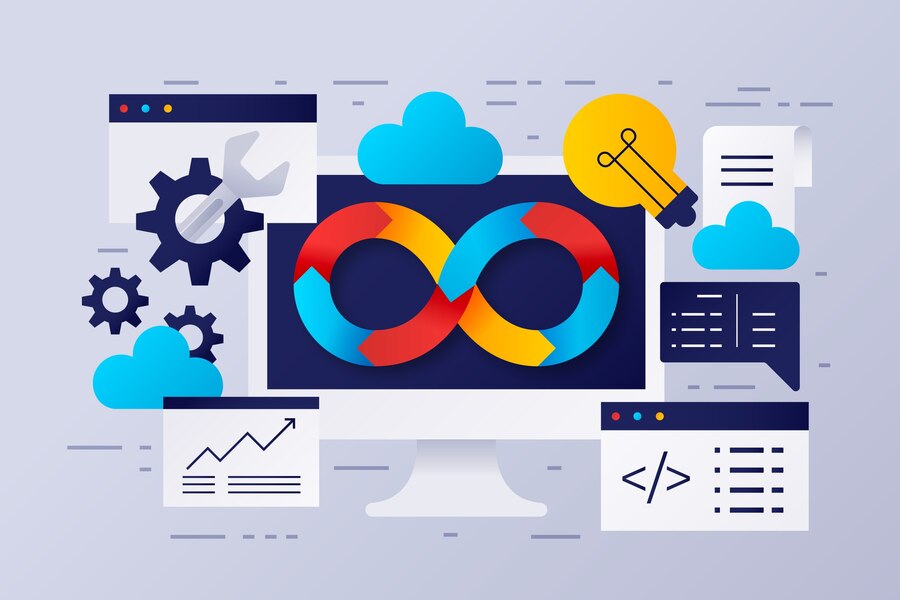
DevOps speeds delivery of higher quality software by combining and automating the work of software development and IT operations teams.
By definition, DevOps outlines a software development process and an organizational culture shift that speeds the delivery of higher quality software by automating and integrating the efforts of development and IT operations teams – two groups that traditionally practiced separately from each other, or in silos.
In practice, the best DevOps processes and cultures extend beyond development and operations to incorporate inputs from all application stakeholders – including platform and infrastructure engineering, security, compliance, governance, risk management, line-of-business, end-users and customers – into the software development lifecycle.
DevOps represents the current state of the evolution of software delivery cycles during the past 20+ years, from giant application-wide code releases every several months or even years, to iterative smaller feature or functional updates released as frequently as every day or several times per day.
Ultimately, DevOps is about meeting software users’ ever-increasing demand for frequent, innovative new features and uninterrupted performance and availability.
Chronology of DevOps
Until just before 2000, most software was developed and updated using waterfall methodology, a linear approach to large-scale development projects. Software development teams would spend months developing large bodies of new code that impacted most or all of the application. Because the changes were so extensive, they spent several more months integrating that new code into the code base.
Next, quality assurance (QA), security and operations teams would spend still more months testing the code. The result was months or even years between software releases, and often several significant patches or bug fixes between releases as well. And this “big bang” approach to feature delivery was often characterized by complex and risky deployment plans, hard to schedule interlocks with upstream and downstream systems, and IT’s “great hope” that the business requirements had not changed drastically in the months leading up to production “go live.”
To speed development and improve quality, development teams began adopting agile software development methodologies, which are iterative rather than linear and focus on making smaller, more frequent updates to the application code base. Chief among these methodologies are continuous integration and continuous delivery, or CI/CD. In CI/CD smaller chunks of new code are merged into the code base every one or two weeks, and then automatically integrated, tested and prepared for deployment to the production environment. Agile evolved the “big bang” approach into a series of “smaller snaps” which also compartmentalized risks.
The more effectively these agile development practices accelerated software development and delivery, the more they exposed still-siloed IT operations – system provisioning, configuration, acceptance testing, management, monitoring – as the next bottleneck in the software delivery lifecycle.
So DevOps grew out of agile. It added new processes and tools that extend the continuous iteration and automation of CI/CD to the rest of the software delivery lifecycle. And it implemented close collaboration between development and operations at every step in the process.

Recent Comments